
Against the backdrop of the global energy transition, traditionally energy-intensive sectors are undergoing structural transformation. As carbon reduction targets continue to accelerate, industries with high energy demand are actively shifting toward greener and more sustainable operations.
As a critical part of urban infrastructure, wastewater treatment plants not only play a key environmental role but also represent one of the most energy-inensive operational scenarios—making them ideal candidates for energy optimization
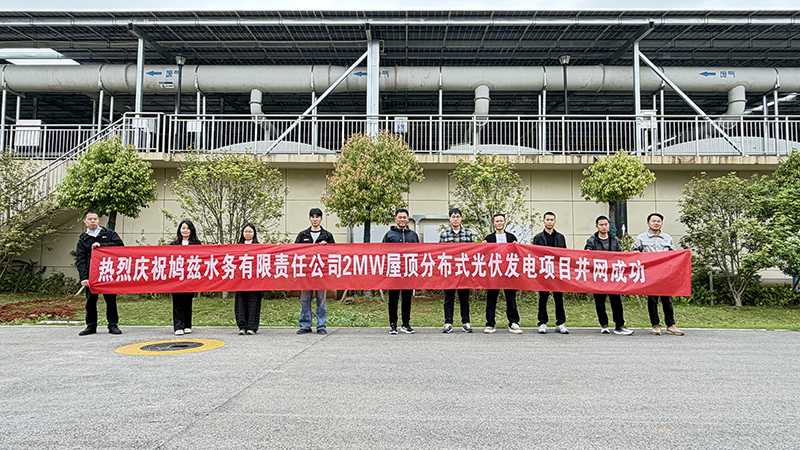
Recently, a solar-plus-storage project delivered by LSH Energy for a state-owned water utility group in Wanzhi District, Wuhu, reached a major milestone. The 2MWp distributed solar PV system was successfully grid-connected on April 14, marking the official integration of clean energy into the plant’s operations. Meanwhile, the supporting energy storage system is progressing as planned.
The project represents an early application of integrated solar and energy storage for wastewater treatment in the region.
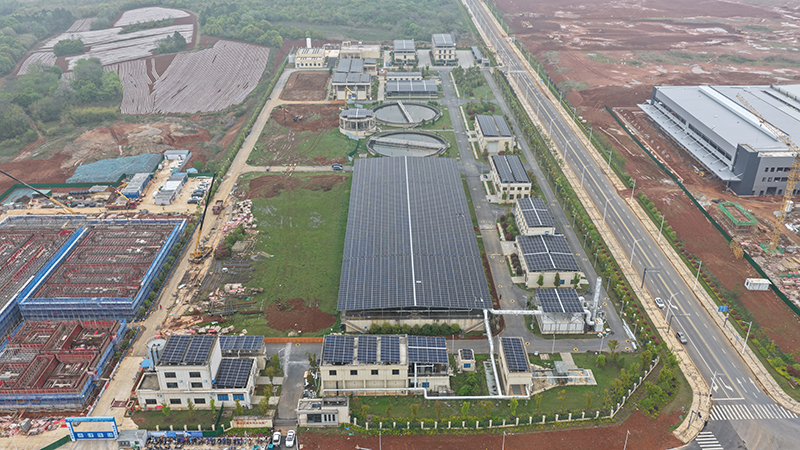
From an operational perspective, wastewater treatment plants are characterized by continuous operation and stable load profiles. This makes them highly compatible with distributed solar PV systems. With a total installed capacity of 2MWp, the system is expected to generate approximately 2 million kWh of clean electricity annually.
By adopting a “self-consumption with surplus export” model, the project enables on-site generation and utilization of clean power, significantly reducing reliance on grid electricity. This not only lowers operational costs but also enhances energy independence and reliability.
The project is expected to deliver annual electricity cost savings of approximately RMB 600,000 while reducing carbon emissions by more than 2,000 tons per year—providing both economic and environmental benefits in measurable terms.
The introduction of energy storage further enhances system performance. By enabling flexible dispatch of solar generation and dynamically matching energy supply with load demand, the storage system allows for more efficient energy allocation across different time periods. As a result, the project evolves from simply optimizing power generation to optimizing overall energy usage.
From a broader perspective, this project represents more than a standalone implementation—it provides a replicable pathway for the green transformation of the wastewater treatment industry. Through the integrated application of solar and energy storage, traditionally energy-intensive facilities are transitioning into modern infrastructure capable of supplying clean energy, achieving both economic and environmental gains.
Throughout the project, LSH Energy delivered a fully integrated solution tailored to the client’s specific energy needs, covering system design, integration, and implementation. By optimizing the coordination between solar and storage systems, the project not only improves operational efficiency but also establishes a more resilient and sustainable energy framework.
As the energy transition continues to deepen, more traditional infrastructure sectors are entering a new phase of green development. The transformation of wastewater treatment plants—from high energy consumption to low-carbon operation—is just one example. Looking ahead, integrated energy solutions will play an increasingly important role in reshaping how energy is produced and utilized.
Post time: Apr-17-2026