
For manufacturing facilities, solar PV can meet part of their daily electricity demand. However, solar generation does not always align with production schedules. When multiple machines start up simultaneously or production loads rise sharply, the facility may still need to draw additional power from the grid.
How can manufacturers make better use of their solar generation while managing peak electricity demand? An energy storage project at a manufacturing facility in Germany offers a practical example.
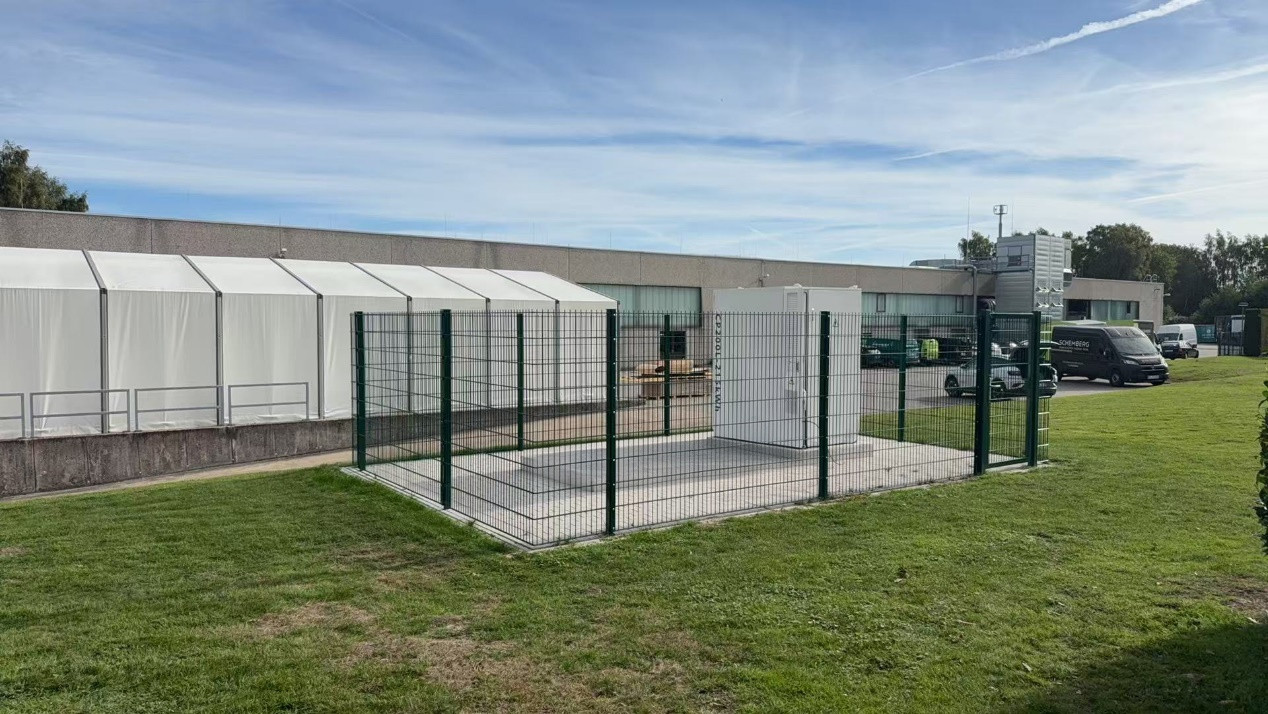
The solution is not to choose between solar power and grid electricity, but to shift surplus solar energy across time so it can be used when production demand peaks.
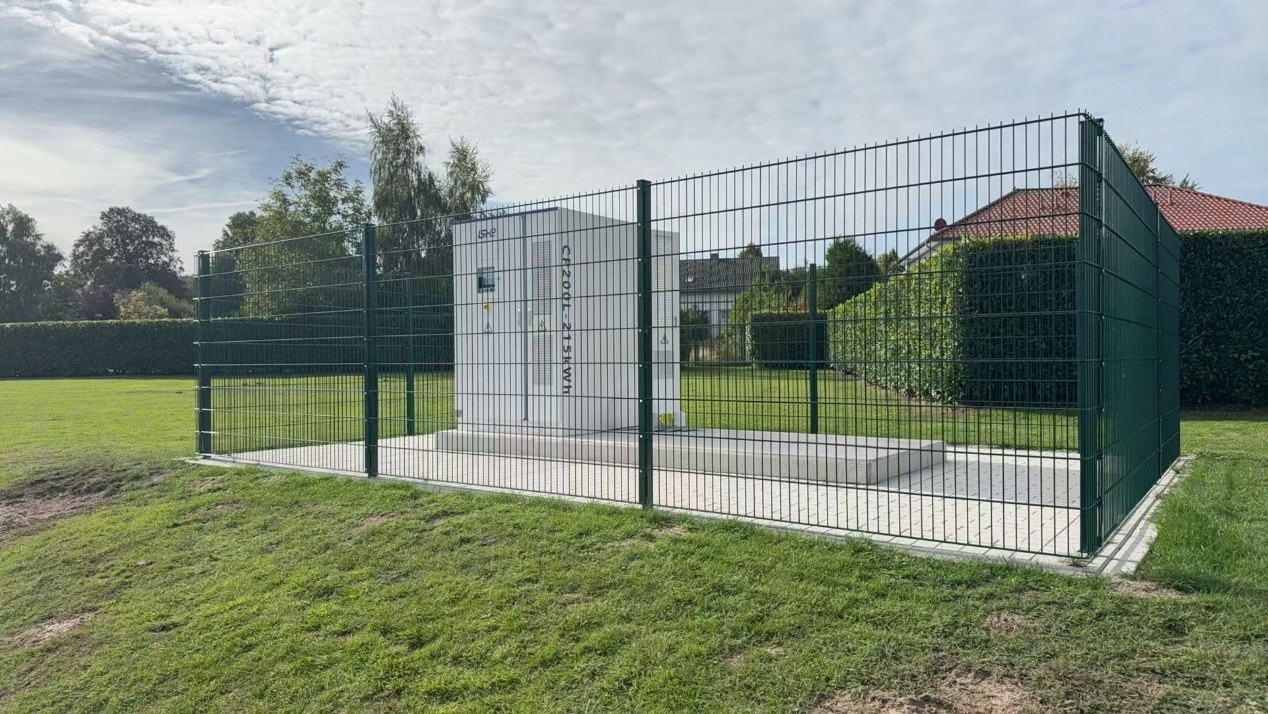
The factory already had a solar PV system in place. To increase on-site solar consumption and better manage its electricity demand, a 100kW/215 kWh energy storage system was installed to operate alongside the existing PV installation.
The system is designed to keep the factory’s grid import power within a target of 95 kW. This threshold may be linked to the facility’s contracted demand limits, electricity tariff structure or grid connection constraints.
How the System Works
Storing Surplus Solar Energy
When solar generation exceeds the factory’s real-time electricity demand, surplus energy can be used to charge the battery, provided that the battery has available capacity and applicable grid-export constraints are respected. This allows energy that would otherwise remain unused on-site to be stored for later use.
Supporting Production During Peak Demand
When multiple production machines operate simultaneously and electricity demand increases, the energy storage system discharges according to the load conditions and control strategy. The stored energy supplies part of the demand, while the grid provides the remaining power. This helps reduce the factory’s peak grid import.
Through coordinated charging and discharging, the system is designed to maintain grid import within the 95kW target while meeting production electricity needs. Actual performance depends on factors such as load fluctuations, available battery power, state of charge and operating constraints.
Designed for Future Expansion
The initial system design also reserves space for two additional energy storage units. As production demand grows or the need for greater on-site solar utilization increases, additional storage capacity can be installed, providing flexibility for future system expansion.
Optimizing Energy Use Through Intelligent Coordination
The value of energy storage lies in its ability to manage when electricity is used. In this project, solar PV generates electricity, while energy storage shifts the use of surplus solar power to periods of higher production demand.
For factories that already have solar PV installations, adding energy storage is more than an expansion of energy infrastructure. It is an opportunity to optimize the existing energy system. By coordinating production loads, solar generation and storage operations, manufacturers can manage how electricity is generated, stored and consumed with greater flexibility.
The key to success is how effectively the control strategy coordinates energy generation, consumption and storage under real operating conditions.
Lei Shing Hong Energy (LSHE) applies its experience in commercial and industrial energy storage integration and intelligent energy management platforms to coordinate power generation, loads and storage in real time. By aligning storage operations with actual load fluctuations, LSHE helps customers put stored energy to work when production needs it most.
Post time: Oct-21-2026